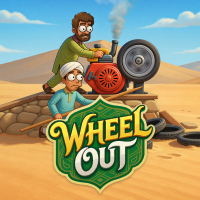
Wheel Out is built around a single decisive action. The player selects a stake amount, optionally chooses a speed for the visual presentation, then presses SPIN. At that instant, the wheel launches onto the desert track and begins traveling automatically. What happens next is entirely out of the player's hands. There are no steering controls to dodge hazards, and critically, there is no manual cash-out button to lock in a favorable result partway through. The wheel continues its journey until it either reaches a safe landing zone—banking the accumulated total—or collides with a terminal hazard like a wall or pit, ending the round immediately with a loss.
This automatic resolution model creates a fundamentally different rhythm compared to games that require constant player decisions. Once SPIN is activated, the experience shifts from active control to focused observation. The wheel rolls forward, and the running total updates in real time as it encounters track elements. A +5 adder provides a quick boost; an x3 multiplier suddenly triples the current value; the dreaded /2 Pigeons slashes everything in half. Because no mid-round intervention is possible, every launch becomes a self-contained story with a beginning, middle, and definitive end. The viral appeal of Wheel Out in markets like India and Pakistan stems directly from this pure, spectator-driven tension.
Understanding this core loop is essential. Wheel Out does not offer steering, braking, or a manual exit. It delivers rapid, self-resolving rounds where the only player input happens before launch. The speed selector adjusts how quickly the visual sequence plays out—Slow, Normal, Fast, or Ultra—but it does not add control during the run. Once the wheel is in motion, the outcome unfolds automatically until a natural conclusion is reached.